
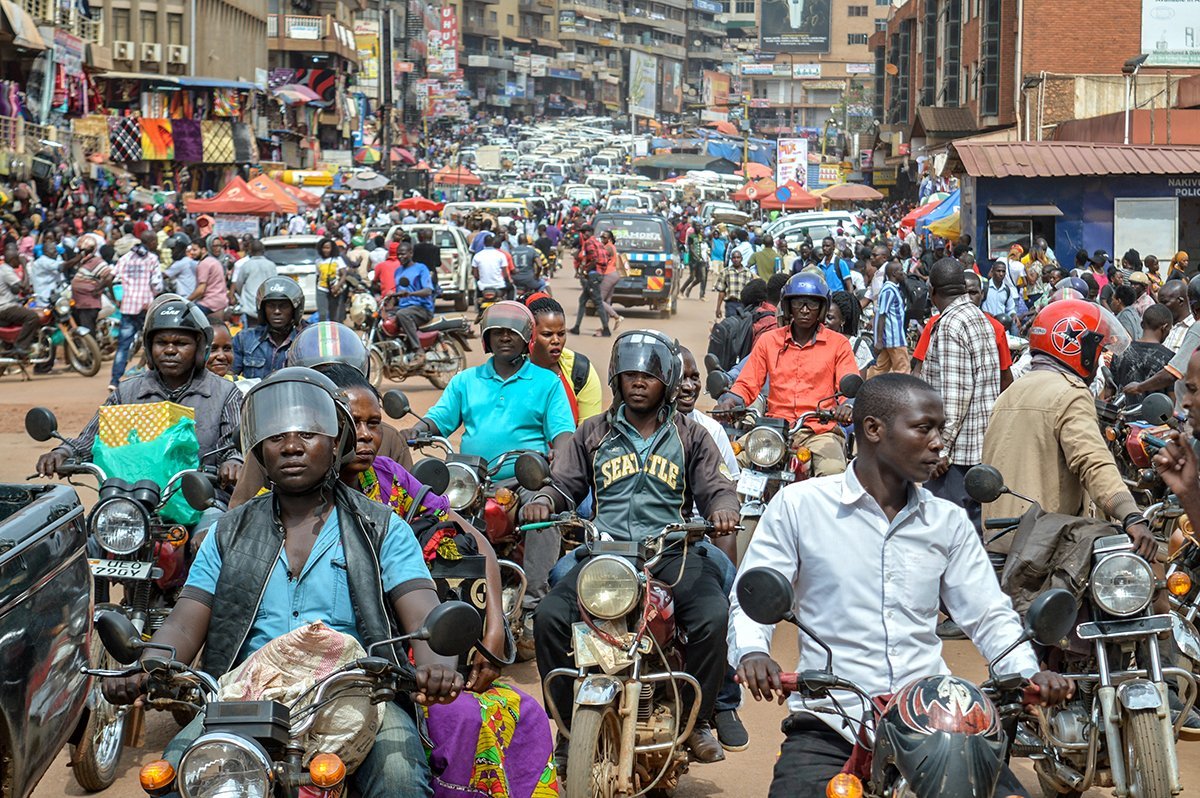
Investigative EditorialUganda’s automotive and transport sectors are facing an invisible roadblock that is grounding billions of Shillings in capital, frustrating motorists, and choking the country’s economic momentum. The culprit is not a lack of demand, nor is it a shortage of vehicles.
Instead, it is a bureaucratic bottleneck at the Ministry of Works and Transport and its digital number plate contractor under the Intelligent Transport Monitoring System (ITMS).Across bonded warehouses, car dealerships, and electric vehicle distribution centers in Kampala, thousands of newly imported or locally assembled vehicles are sitting idle. Motorists are paying for their vehicle registrations months in advance, yet they are left stranded with brand-new machines they cannot legally drive on public roads.
The transition to high-tech vehicle tracking was pitched as a seamless leap into a “Smart City†future. Instead, it has morphed into a structural nightmare for transport operators, multi-national logistics brands, and ordinary citizens alike.
Why are digital number plates delaying in Uganda in 2026?
The primary cause of the current gridlock lies in a severe shortage of essential physical and digital components required for the new ITMS rollout. Under the mandatory guidelines, every newly registered vehicle must be fitted with a digital plate equipped with a tracking device and a Bluetooth beacon. However, the contractor, Joint Stock Company Global Security, has repeatedly run out of stock for these critical parts.
While the Ministry of Works and Transport has officially pointed to global supply chain disruptions—specifically citing shipping reroutes due to regional instability in the Middle East—business owners argue that this points to a fundamental lack of buffer stock management. Because the entire registration system is heavily centralized, a shortage of a single tracking microchip in a Kyambogo assembly line leaves a car buyer in Malaba or a motorcycle fleet operator in Kampala completely paralyzed.
Applications that are paid for and processed through the URA and ITMS online portals frequently get stuck in a “booking status†for weeks on end, leaving owners with zero clarity on when their plates will actually be stamped and fitted.
How does the current vehicle registration system compare to the old one?
To understand the immense frustration currently rippling through the transport industry, one only has to look at how things used to operate before the digital plate mandate took full effect. The Old System: Previously, vehicle registration was decentralised, highly competitive, and remarkably swift.
When a consumer purchased a vehicle or a motorcycle from a bond or local distributor, the number plate essentially came with the machine. Service providers like GM Tumpeco could process and deliver physical plates within 24 to 48 hours. A buyer paid their fees, cleared customs, and drove out of the bond fully legal on the exact same day.
The Current ITMS System
Today, the entire philosophy has been turned upside down. Motorists are forced to order and pay a steep fee of Shs 714,300 for a digital plate prior to finalizing the vehicle’s release. Despite this advance payment, the processing speeds have plummeted. It is now common for the actual car or motorcycle to arrive at the owner’s premises while the number plate remains stuck in an administrative void. This leaves the owner possessing an expensive asset that is practically illegal to operate outside private property.
Which transport and automotive companies are affected by the number plate crisis?
This crisis is not just affecting individual luxury car buyers; it is hitting Uganda’s major commercial transport and e-mobility ecosystems directly in their operations. Multi-national companies and fleet managers who rely on high-volume asset deployment are the biggest casualties: Bajaj, TVS Yuvraj, Honda by Markh, Simba Automotive, Haojue, Kevla and Major Auto Dealers: Traditional automotive heavyweights are watching their inventories pile up.
Car bonds near the Spear Motors traffic lights and across Kampala report that showroom floors are congested with sold vehicles that cannot be handed over to clients because “the plates are out of stockâ€.
Spiro Uganda, Mocco, Gogo, Zembo, Kevla, and others The e-mobility giant has scaled its infrastructure massively across the country. However, sources close to the sector reveal that thousands of eco-friendly electric motorcycles are currently parked at distribution sites and bonds. The bikes are fully assembled, tested, and ready to hit the road, but they cannot be deployed to riders because the Ministry cannot provide the plates on time.Ride-Hailing Networks: SafeBoda, Uber, UnionApp, Faras and other gig-economy platforms rely on a steady influx of new, compliant riders to meet urban delivery and transit demands.
Because new motorcycle registrations are facing weeks of delays, thousands of youth are blocked from entering the workforce.
What is the financial cost of number plate delays to Ugandan businesses?
The inefficiencies of the Ministry of Works and Transport are translating directly into massive financial losses for the private sector. When a vehicle remains unregistered, the economic damage compounds daily:[Vehicle Arrives at Bond] âž” [Advance Plate Fee Paid] âž” [Component Shortage Delay] âž” [Daily Demurrage Charges Accumulate] âž” [Business Revenue Lost]Car dealers and importers are facing catastrophic demurrage and storage fees. Bonded warehouses charge daily rates for every square meter a vehicle occupies. If a commercial truck or a public transport vehicle is held up for three weeks awaiting a number plate, the dealer loses millions in storage costs alone, wiping out their profit margins.
Furthermore, commercial entrepreneurs who take out bank loans to purchase asset-backed vehicles (such as delivery vans, corporate fleets, or cargo trucks) are forced to start servicing loan interest payments before the vehicle has generated a single Shilling in revenue. This is actively stalling business growth and dampening investor confidence in Uganda’s transport logistical sector.
What is the Ministry of Works and Transport doing to fix the ITMS bottleneck?
Over the years, Works and Transport Minister has called high-level stakeholder meetings to audit the systemic failures. However, these have been futile as the ministry has remained incompetent in the issuance of number plates.
While the ministry’s technical teams frequently try to blame documentation errors by clearing agents, the structural deficit within the ITMS supply chain is undeniable. In response to the outcry, the government has directed Joint Stock Company Global Security to decentralize its operations. Plans are reportedly underway to establish 20 to 24 regional installation centers to stop forcing upcountry motorists from traveling all the way to Kyambogo for fitment services.
Additionally, the ministry has mandated that the contractor must maintain a permanent three-to-four-month buffer stock of digital plate components to prevent global shipping fluctuations from paralyzing domestic commerce in the future. The Bottom Line: Advance Payments Demand Immediate ServiceUgandans are compliant citizens; they have proven this by paying the high registration fees up front without hesitation.
It is therefore an administrative failure for the Ministry of Works and Transport to accept these advance payments while failing to deliver the corresponding plates within a reasonable commercial timeframe.If Uganda wants to build a modern, competitive, and digitized economy, its basic logistical systems must work seamlessly. You cannot invite multi-million dollar e-mobility investments into the country, only to clip their wings because of an unvetted supply chain bottleneck.
The Ministry and ITMS must clean up their act, streamline the portal, decentralize production, and ensure that a paid-for number plate is delivered exactly when the vehicle is ready to move. The wheels of Ugandan commerce cannot afford to wait.