
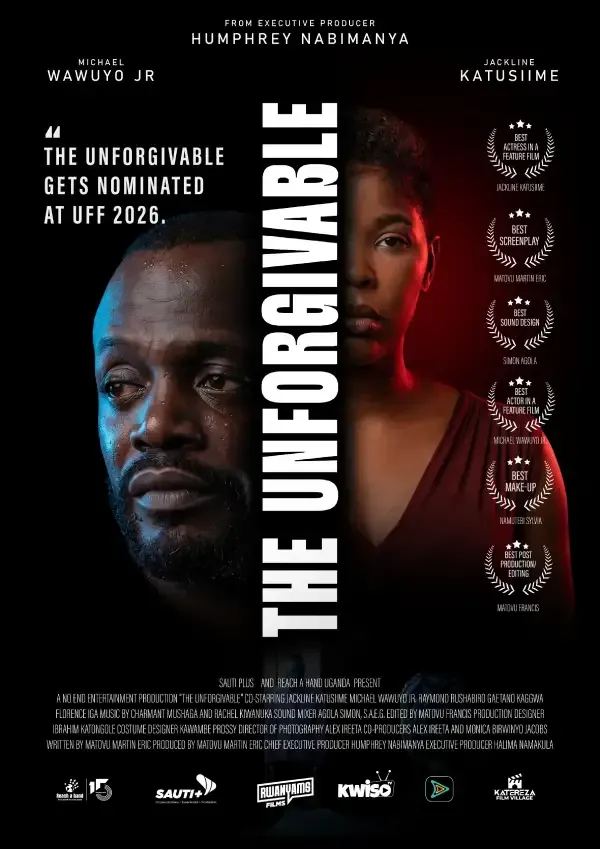
The growing influence of advocacy storytelling in Uganda’s film industry received another powerful endorsement after Reach A Hand Africa’s The Unforgivable secured six nominations at the Uganda Film Festival 2026. The recognition not only celebrates cinematic excellence, but also shines a spotlight on the urgent social conversations the film courageously brings to the forefront.
Produced by Reach A Hand Africa Chief Executive Officer Humphrey Nabimanya, The Unforgivable forms part of the organisation’s wider #MenPlus Project, an initiative that encourages positive male involvement in family planning, maternal health, and sexual and reproductive health discussions. Through emotionally layered storytelling, the project continues to challenge harmful gender norms while encouraging shared responsibility within homes and relationships.
Set against the emotional weight of trauma, silence, and survival, The Unforgivable tells the story of Salaama, a teacher whose life begins to unravel after her husband loses his job. What initially appears to be an ordinary family crisis quickly descends into alcohol abuse, domestic violence, and emotional instability. However, the film goes far beyond surface-level conflict. Instead, it carefully explores how unresolved childhood trauma can quietly shape adult relationships and family dynamics.
Directed by Matovu Martin Eric, the film examines the painful cycle of intergenerational abuse through Salaama’s personal struggle to protect her daughter while confronting memories she believed she had buried long ago. As the story unfolds, audiences witness the difficult tension between revenge and healing, fear and resilience, silence and liberation. Consequently, the film delivers not only a gripping emotional experience, but also a deeply reflective social commentary.
While many advocacy projects often struggle to balance messaging with compelling storytelling, The Unforgivable succeeds because it refuses to dilute either element. The narrative remains emotionally authentic, yet the message around men’s involvement in reproductive health and family wellbeing stays clear throughout the film. As a result, the production resonates with audiences far beyond traditional awareness campaigns.
The nominations also strengthen the growing reputation of Reach A Hand Africa as an organisation that understands the power of culture and creative arts in shaping public conversations. Over the years, the youth-led non-profit has consistently used music, film, digital campaigns, and community engagement to connect with young Ugandans on issues that directly affect their lives. Through the Men+ Project, the organisation now expands that mission by using film to challenge outdated perceptions around masculinity and caregiving.
In addition, The Unforgivable stands alongside two other productions under the Men+ creative series: Operation Salongo by Denis D Junior and Wuuzi by David Mukama. Together, the three films examine different realities surrounding maternal health, household leadership, family planning, and the emotional responsibilities men carry within families and communities. Although each production approaches the subject differently, all three works aim to encourage healthier conversations around partnership, empathy, and accountability.
Speaking about the milestone, Humphrey Nabimanya praised the collective effort behind the production and acknowledged the dedication of the cast and crew who helped bring the story to life. He explained that the nominations reflect the growing role creative expression continues to play in advancing social change and opening up conversations around family health and wellbeing.
Furthermore, the Uganda Film Festival recognition highlights a broader shift happening within Ugandan cinema. Increasingly, filmmakers and advocacy organisations are moving beyond entertainment alone and embracing storytelling as a tool for education, healing, and social transformation. Films like The Unforgivable now prove that audiences can engage with difficult realities through narratives that feel both intimate and deeply human.
At a time when conversations around domestic violence, mental health, and reproductive responsibility continue to evolve across Uganda, The Unforgivable arrives with unusual emotional urgency. Rather than offering easy answers, the film invites viewers to reflect on the consequences of silence, the complexity of trauma, and the importance of compassion within families.
Ultimately, the six Uganda Film Festival nominations represent more than industry recognition. They mark an important moment for advocacy cinema in Uganda, where storytelling increasingly serves as both a mirror and a catalyst for change. Through The Unforgivable, Reach A Hand Africa demonstrates that film can do far more than entertain. It can challenge harmful norms, inspire dialogue, and encourage communities to imagine healthier and more supportive relationships for future generations.