
A quiet but significant shift is taking shape in Uganda’s cultural landscape. At Bulange, leaders of the Buganda Kingdom have begun exploring a partnership that could reshape how the world engages with the country’s history. At the center of this development stands Flames of Faith, an ambitious historical film by Mathew Nabwiso that revisits the story of Kabaka Mwanga II and the Uganda Martyrs.
This emerging collaboration did not happen by chance. Instead, Rosa Malango, who serves as the Special Presidential Envoy for Tourism and Trade, actively championed the idea. She continues to push for stronger links between Uganda’s creative industry and its traditional institutions. As a result, she has positioned storytelling as a strategic tool for economic and cultural transformation.
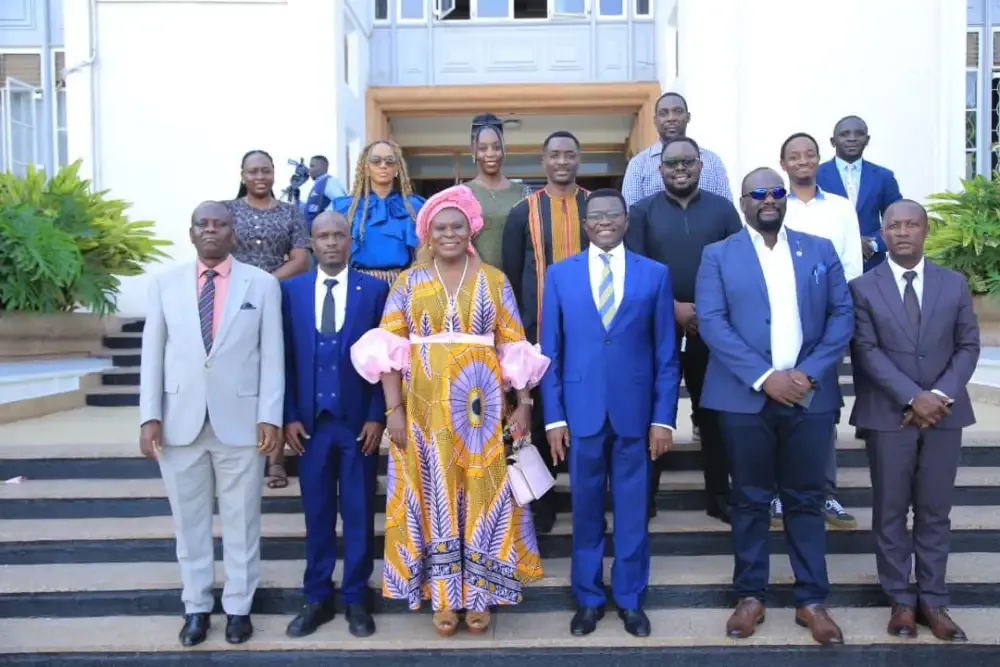
During a high-level meeting in Mengo, Malango led a delegation that included representatives from the Producers Guild of Uganda and the iKON Film and Television Awards. Together, they engaged with Charles Peter Mayiga, alongside key ministers such as Anthony Wamala and Robert Sserwanga. The discussion focused on how film can elevate Buganda’s historical narrative while driving tourism directly into local communities.

At the heart of the proposal lies a clear vision. Malango aims to transform Uganda’s historical stories into compelling global cinema. In doing so, she seeks to attract international audiences and inspire them to visit the very places where these events unfolded. Consequently, this approach promises not only cultural preservation but also tangible economic benefits for communities.
The Katikkiro welcomed the initiative and underscored its broader significance. He emphasized that many people struggle to understand places they have never experienced firsthand. Therefore, he argued that film offers a powerful way to present Uganda’s identity, values, and opportunities to a global audience. His remarks signaled a growing openness within the kingdom to embrace modern storytelling platforms.
Meanwhile, Flames of Faith continues to gain attention as a project rooted deeply in national identity. Nabwiso brings considerable experience to the production, having earned recognition for films such as Sabotage, Rain, and Prickly Roses. Through this new work, he intends to revisit a defining chapter in Buganda’s history with authenticity and cinematic depth.
At the same time, the broader film industry has begun to shift. Organizations like the iKON Awards and the Producers Guild now encourage filmmakers to pursue stories that reflect local realities. As a result, Ugandan cinema increasingly prioritizes authenticity over imitation. This engagement with Buganda Kingdom therefore builds on an already growing movement toward intentional storytelling.
Ultimately, the discussions at Bulange point to something larger than a single film. They reflect a deliberate effort to connect culture, creativity, and tourism into a unified strategy. If the partnership moves forward, it could mark a turning point in how Uganda presents its heritage to the world. Moreover, it could establish a model where historical narratives not only preserve identity but also actively contribute to national development.
For now, the possibility remains under consideration. However, the momentum behind Flames of Faith suggests that Uganda’s past may soon find a powerful new voice on the global stage.